What a Runner Summary Should Show
How runner summaries help teams verify AI-generated code work through task input, model audit, pull requests, CI, and reviewable Git artifacts.
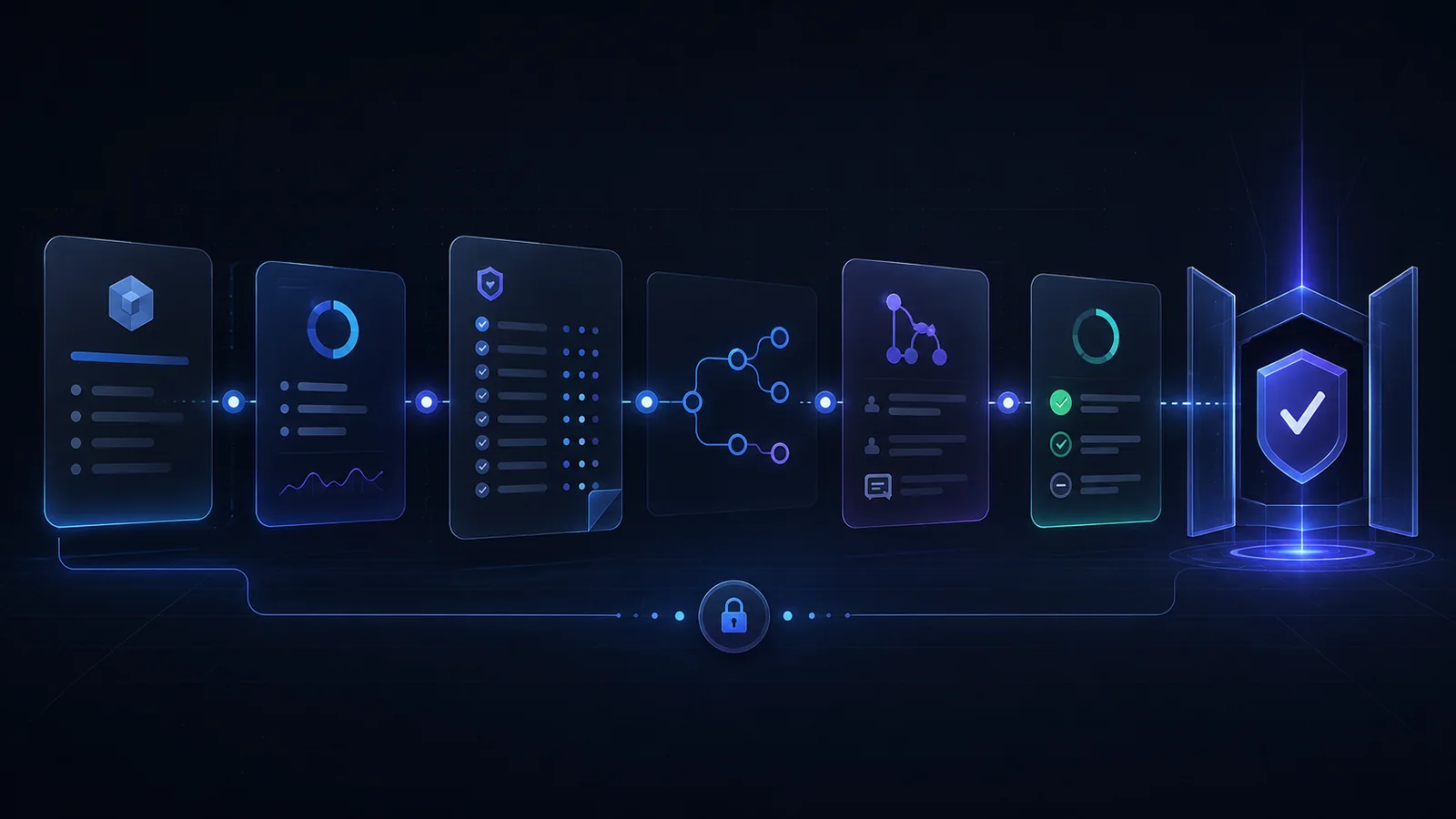
Code agents are becoming easier to start and harder to evaluate. A runner summary gives reviewers a practical checkpoint before they trust AI-generated repository work.
Code agents are becoming easier to start and harder to evaluate.
That is the real adoption problem for engineering teams. A model can produce a patch, a branch, or a pull request. But before a staff engineer or platform lead can trust the work, they need a way to answer more basic questions: what was the agent asked to do, what does it say it changed, which model produced the work, and where can the team verify the result?
That is where a runner summary matters.
A runner summary is not a promise that the agent was right. It is a checkpoint. It gives the reviewer a human-readable starting point, then the reviewer verifies the claim against the normal engineering artifacts: branch, commits, pull request, CI result, and review discussion.
For teams adopting AI runners, that distinction is important. Trust should not come from a confident agent response. Trust should come from inspectable work.
The problem with invisible agent work
Private coding assistants are useful when one developer needs help. The developer asks a question, gets a response, and decides what to copy, change, or ignore.
Company workflow is different. Engineering teams do not ship from private prompts. They ship through shared systems: issues, tasks, branches, pull requests, CI checks, reviews, and releases. If an AI agent is going to do real repository work, the team needs visibility at those same checkpoints.
Without that visibility, reviewers are left with weak signals:
- a final diff with little context
- a generated explanation that may be incomplete
- uncertainty about which model produced the work
- no clear connection between the original task and the resulting pull request
- no obvious way to decide whether the work should be trusted, revised, or rejected
The goal is not to expose every internal step of the agent. The goal is to give the human reviewer enough information to verify the work quickly and confidently.
What Forkline keeps per runner
Forkline’s terminology is deliberately narrow.
For each runner, Forkline keeps three product-side artifacts:
- Task input: the user-authored message, ticket body, or issue body that triggered the runner.
- Runner summary: the agent’s final answer or summary of what it did.
- Model audit: the model used for that runner.
The rest of the verification layer belongs in the user’s Git provider:
- branches
- commits
- pull requests
- CI runs
- review comments and decisions
That split is intentional. Forkline is not trying to replace Git review with another private record. It is trying to put AI work back into the systems engineering teams already use.
It is also important to say what Forkline does not retain. Forkline does not keep full agent conversation history, chain-of-thought, tool-call traces, streaming runner output, or per-step records of the agent’s internal process.
That is a product boundary, not a gap to hide. Public AI tooling should be precise about what it keeps and what it does not keep.
Task input
What started the runner
Runner summary
What the agent claims it did
Model audit
Which model produced the work
Branch
Where changes live
Commits
Concrete change records
Pull request
Reviewable merge target
CI runs
Validation evidence
Review
Human decision trail
Why summaries are useful even without full internal records
For review, the most useful question is rarely “Can I replay every internal step?” It is usually:
“Can I understand what the runner claims it did, then verify that claim against the actual engineering work?”
A useful runner summary helps with that workflow. It should make the reviewer faster at finding the important evidence, not ask them to trust the agent blindly.
The review loop should look like this:
- Read the original task input.
- Read the runner summary.
- Check which model produced the work.
- Open the pull request.
- Inspect the diff and commits.
- Check CI status where applicable.
- Approve, request changes, or reject.
That is the auditability model Forkline is built around: human review gate, Git artifacts, runner summary, and model audit.
The runner summary is only one part of the trust system. The pull request and CI result still matter more than the agent’s explanation. But the summary gives reviewers a map before they inspect the terrain.
Read
Task input
Read
Runner summary
Check
Model audit
Open
Pull request
Inspect
Diff + commits
Check
CI status
Decide
Approve or reject
What a good runner summary should include
A runner summary should be short enough to read and specific enough to verify.
For repository work, the useful fields are practical:
- Original task: what the runner was asked to do.
- Diagnosis: what problem the runner believes it found.
- Changes made: the files, configuration, or behavior it changed at a high level.
- Verification performed: the checks it ran or the CI status it observed, without overstating proof.
- Next human decision: what the reviewer should inspect next.
The summary does not need to sound impressive. In fact, impressive language is a liability. A reviewer needs clear claims that can be checked.
Bad summary:
I comprehensively repaired the workflow and improved the repository.
Better summary:
I updated the GitHub Actions workflow to replace a non-existent action tag with an existing pinned version, replaced a deprecated action, and pushed the changes to this pull request. Please review the workflow diff and the CI result before merging.
The second version is better because it is falsifiable. A human can open the diff, check the action versions, and inspect the CI result.
Model audit matters for BYOM
Forkline is BYOM: bring your own models and API keys. Teams can connect their chosen model providers instead of being forced into one bundled model layer.
That makes model attribution important. If multiple providers or models can produce work, reviewers and operators need to know which model was used for a specific runner. The model audit is the record that connects the work item to the model that produced it.
This does not turn model choice into a quality guarantee. A better model name does not make a bad diff safe. But attribution gives teams a way to reason about provider choice, cost, availability, and review expectations over time.
For a staff engineer, that is the useful level of control: not just “AI did it,” but “this runner used this model, produced this PR, and left this evidence for review.”
A real runner summary example
A small example from Forkline’s public ingress-nginx fork shows the shape of this review packet.
In PR #76, Renovate opened a dependency update
for google.golang.org/grpc/examples. Forkline then pushed a focused security dependency fix on the
same branch: update golang.org/x/net from v0.54.0 to v0.55.0 for GO-2026-5026, a Punycode validation
issue.
The useful part for this article is not that the change was large. It was not. The useful part is that the runner left a concise summary in the PR conversation:
Fix pushed: Updated
golang.org/x/netfrom v0.54.0 to v0.55.0 to fix security vulnerability GO-2026-5026 (Punycode validation issue). The fix has been pushed to therenovate/go-modulesbranch.
That summary gives a reviewer a practical starting point:
- what changed:
golang.org/x/netv0.54.0 to v0.55.0 - why it changed: GO-2026-5026
- where to verify it: the branch, commit, pull request, and checks
- what not to assume: the summary is a claim to inspect, not proof by itself
The PR still had normal GitHub artifacts around it: commits, a pull request, checks, and a merge record. That is the point. The runner summary should point the reviewer toward those artifacts, not substitute for them.
For deeper CI recovery examples, Forkline has separate PRs where runners iterated through failing checks. But for trust and auditability, the smaller example is useful because the summary is easy to falsify. A reviewer can inspect the dependency change, read the security context, and check the final GitHub state without trusting a private prompt transcript.
What this means for engineering teams
Teams evaluating AI runners should ask for artifacts that fit their existing workflow.
Useful questions include:
- Does each run preserve the original task input?
- Does the runner produce a readable summary of what it says it did?
- Can the team see which model produced the work?
- Do changes land as branches, commits, and pull requests?
- Does CI or repository validation run where relevant?
- Is a human still the final reviewer?
If the answer is yes, the team can evaluate AI work with the same habits it already uses for human work: read the task, inspect the diff, check validation, and decide.
That is more useful than asking teams to trust a black box. It is also more realistic than pretending AI work should be fully autonomous from day one.
The bottom line
A runner summary is not the whole trust layer. It is the readable checkpoint that helps a reviewer start in the right place.
For AI runners to be useful in engineering teams, they need to produce work that can be verified in normal engineering systems. That means task input, runner summary, model audit, Git artifacts, CI where applicable, and a human review gate.
Forkline’s position is simple: AI-generated work should not disappear into private prompts. It should land as visible, reviewable engineering work.
Proof reference: ingress-nginx runner summary PR #76
Source terms: runner summary, model audit, Git artifacts, and auditability are defined in Forkline’s canonical terminology guide.